Office Clearance in Willesden

Office clearance in Willesden needs to be organised, practical and suited to the way businesses actually work. We provide a straightforward service for clearing offices, removing redundant furniture and dealing with unwanted items in a tidy, orderly way. Whether you are making room for a new layout, moving out of premises or reducing clutter after a period of change, the aim is to leave the space ready for what comes next without creating avoidable disruption.
Our service can cover individual rooms, shared work areas, storage spaces and larger commercial clearances. We handle a range of common office items, including desks, chairs, filing cabinets, shelving, meeting tables, small electrical items and general non-hazardous waste. Where possible, items are separated for reuse, recycling or disposal according to their condition and material. If you need a clear plan for removing office contents, the first step is simply to identify what needs to go and when access is available.
For a quotation, you can share the basics of the job and the access arrangements in plain terms. If there are bulky items, upper floors, tight corridors or specific timing requirements, mentioning them early helps the work be planned sensibly. A well-prepared enquiry saves time, but it does not need to be complicated. If you are ready to arrange your office clearance in Willesden, please get in touch for a quotation.
What Our Office Clearance Covers
Office clearance can mean very different things from one business to another, so the service has to be flexible. Some customers need a single room cleared after a refit; others need several floors emptied before handing back a lease. Our work is centred on the practical removal of office contents, with attention to sorting, lifting and leaving the area in a usable state. That may include furniture, archive material, fixtures that are due to be replaced and items that have reached the end of their working life.
We also work around the realities of business premises. Shared buildings, managed offices and older commercial properties can each present different access conditions, from lifts and loading points to stair-only access and limited parking. Where clearance needs to be phased, that can be planned too. The main point is to keep the process orderly and avoid unnecessary disturbance to staff, neighbours or other occupiers. If you need a broader clean-out rather than a simple furniture removal, this service can be shaped around that need.
Common office items we remove
Typical office clearances include practical items that build up over time and take up more space than expected. These often include:
- Desks, task chairs and visitor seating
- Cabinets, pedestals and shelving
- Reception furniture and boardroom tables
- Boxes of paperwork, stationery and storage items
- Small electrical equipment and peripherals
- Mixed office waste and miscellaneous unwanted contents
Furniture Removal and Workspace Reorganisation
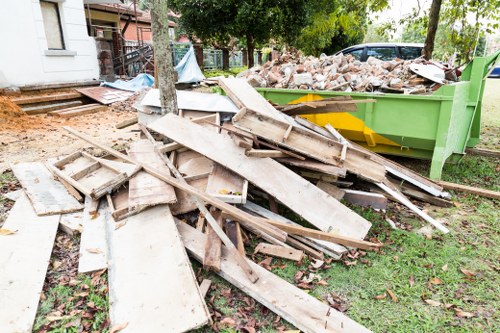
Many office clearance projects begin with the furniture. Heavy items can be awkward to dismantle, move and carry through narrow corridors, especially where the existing layout was never designed for easy removal. We can deal with bulky desks, meeting tables, cabinet units and seating as part of one planned clearance, helping to open up the space for refurbishment, relocation or new occupancy. Where furniture is still usable, separating it properly can make the process more efficient.
Workspace reorganisation often follows the same pattern. Businesses may be reducing the number of desks, changing to shared workstations or clearing storage areas to create room for people and equipment that matter more day to day. In those situations, it is useful to think about the clearance in zones rather than as one vague task. Reception areas, back offices, stores and meeting rooms can each be addressed in turn so that the removal work supports the wider change to the premises.
Where there are several types of items in one job, we can keep the sequence sensible. A clear route, safe lifting and predictable handling matter more than rushing through a room. That is especially true where office furniture includes glass panels, awkward shapes or fitted pieces that need more care. If you are planning a clearance alongside new furniture arriving, it is worth deciding which items should leave first so the space is ready when needed.
Archive, Paperwork and General Office Contents
Not every office clearance is about furniture alone. Paper records, boxed files, archived folders and accumulated supplies can take up substantial room, particularly in storage cupboards and back rooms. We can clear general office contents as part of the service, making sure mixed items are separated where that is useful. Some businesses are reducing paper storage, while others are emptying a site entirely; in both cases, the work benefits from a careful approach to sorting and removal.
It is also common for offices to contain a mix of older items that no longer have a clear purpose: promotional material, display items, surplus IT accessories, stands, small shelving units and miscellaneous stock. These can often be cleared in the same visit, provided the access and load are understood beforehand. The more the contents are described in practical terms, the easier it is to plan the right size of clearance and avoid delays on the day.
For jobs involving archive material, please make sure anything that must remain on site is set aside before the clearance begins. That simple step helps protect essential records and keeps the work focused on the items that are genuinely ready to go. For a proper quotation, it is usually enough to identify the main item groups, the floor or room locations and any access limits.
How We Plan an Office Clearance
A useful clearance starts with a clear understanding of what is being removed and how the site is accessed. Photographs, room counts and a short list of the main item types can help define the job, but they are most useful when they are specific rather than overcomplicated. If there are items to dismantle, restricted hours or building rules to follow, those details should be included too. That allows the work to be priced and scheduled in a way that reflects the premises rather than a generic assumption.
It also helps to decide whether the clearance is a full emptying of the office or a partial removal of selected items. A full clearance usually requires more sorting and more time on site, while a partial job may focus on certain rooms, storage areas or individual bulky items. If you are coordinating other trades or a handover deadline, letting us know the sequence of work can make the process much smoother. A brief, accurate description is often enough to begin.
Details that help us quote accurately
When asking for a quotation, it is useful to mention:
- The rooms, floors or areas involved
- The main types of furniture or contents
- Any lifting, dismantling or carrying restrictions
- Parking, loading or access issues
- Your preferred timing window
Commercial Waste, Disposal and Recycling

Office clearance often overlaps with the removal of commercial waste, but not every item should be treated the same way. Reusable furniture, recyclable materials and general refuse may all be present in the same premises, so the work benefits from sorting rather than dumping everything together. We aim to direct suitable items into the most appropriate route available, while keeping the physical clearance efficient and straightforward for the customer.
Where office items are no longer needed, disposal must still be handled in a responsible way. That applies to mixed materials, broken furniture and items that have simply reached the end of their working life. The practical side of the job is to remove them cleanly; the sensible side is to separate whatever can be recycled or diverted. If you are comparing options for office clearance in Willesden, it is worth considering not just the speed of removal but also how the contents will be handled after they leave the premises.
For businesses with several different waste streams, a single site may produce old furniture, cardboard, packaging, shelving and general office rubbish at the same time. A well-organised clearance can address those items together, which is often more convenient than arranging separate collections. That said, items requiring specialist handling should always be identified in advance so the job can be assessed properly and carried out in line with the right requirements.
About Willesden
Willesden is a district in the London Borough of Brent, in northwest London, with a long history shaped by suburban growth, transport links and a mix of residential and commercial development. Willesden Green is closely associated with the area, and the name appears in places such as Willesden Junction, which reflects its importance as a transport interchange. The locality lies within a wider urban patchwork that includes older streets, post-war housing and stretches of more recent redevelopment, giving it a layered character rather than a single uniform centre. Religious and cultural landmarks add to that character, including the landmark frontage of St Mary’s Church and the presence of the Willesden Jewish Cemetery, both of which speak to the area’s long-established communities. The district also sits within reach of several green spaces, among them Roundwood Park and King Edward VII Park, which offer a contrast to the built-up streets around them. Willesden Green Library Centre is another notable public building, combining library services with a local cultural role. The area’s street pattern and architecture show traces of Victorian and Edwardian expansion, later infill and the continuing evolution of northwest London as a dense, mixed-use urban district. That blend of heritage, housing and movement has made Willesden a recognisable part of the capital in its own right, while still remaining connected to the wider city through rail and Underground links.
Office Clearance for Moves, Refits and Handover
Some clearances are tied to a move, a refit or the end of a lease, and each of those situations has slightly different priorities. A move may involve clearing surplus furniture while keeping some items ready for transfer. A refit may need rooms emptied in stages so contractors can work. A handover usually requires the remaining contents to be removed in a way that leaves the premises presentable and workable for the next step. The same service can fit all three, but the planning is not identical.
In commercial settings, timing matters as much as the physical removal. Shared entrances, building management rules and business hours may limit when collections can take place, so it is often best to agree the broad sequence early. If you need certain rooms cleared before others, or if access is limited to a specific day, that should be built into the plan. Clear instructions and practical access details make it easier to keep the job moving without confusion.
Where there are staged clearances, it can help to think in terms of priority items. Anything needed for ongoing operations should be separated first, followed by redundant furniture and then the remaining loose contents. That approach reduces the risk of accidental removal and helps keep the site functional until the last phase of work is complete. If you have a clear deadline, it is sensible to mention that when requesting a quotation so the work can be assessed in context.
Why Businesses Choose a Structured Clearance

Office clearances can become disorganised when items are moved without a plan. A structured approach is more useful because it keeps the removal process tied to the actual layout of the premises and the business purpose behind the clearance. That can matter in active offices, shared buildings and locations where noise, movement or loading space need to be managed carefully. The aim is not just to remove items, but to do it in a way that makes sense for the site.
There is also a practical benefit in defining what stays and what goes before work begins. A room that contains a mix of keep items, disposal items and items for another location is easier to handle when those groups are identified in advance. This reduces confusion, supports safer lifting and helps the clearance proceed at a steady pace. If needed, a room-by-room approach can be taken so the business retains more control over the order of work.
Good office clearance is usually about decisions as much as lifting. Once the items have been categorised, it becomes easier to select the right treatment for each one and move through the property with less disruption. For customers arranging office clearance in Willesden, a clear brief and a sensible sequence are often the difference between a stressful job and one that feels properly managed.
Preparing for Your Quotation
 A quotation is easiest to prepare when the main facts are easy to understand. It helps to know the size of the office, the types of items involved and whether the clearance is full or partial. If you can describe access in straightforward terms, such as stairs, lifts, loading points or shared entrances, that also gives a better starting point. The more accurate the description, the more relevant the quotation is likely to be.
For some jobs, a few photographs and a written list are enough; for others, a room-by-room summary is more useful. Either way, the purpose is the same: to understand the work before it starts so the clearance can be planned sensibly. If there are items that must not be removed, it is best to identify them clearly. When the job is tied to a move or handover, include the timing as well so the arrangement fits the wider schedule.
If you need office clearance in Willesden, the next step is simple: contact us with the details of the space and the items to be removed, and ask for a quotation. We will use the information provided to shape the service around your premises and your timetable. Make the enquiry today and let us help you move the clearance forward.